Mental Health Awareness is about understanding, supporting, and promoting emotional well-being while reducing the stigma surrounding mental illness. It encourages open conversations, early intervention, and access to care for everyone. Here’s a quick overview:
🌱 What Is Mental Health?
Mental health refers to our emotional, psychological, and social well-being. It affects how we think, feel, and act — and how we handle stress, relate to others, and make choices.
Good mental health isn’t just the absence of mental illness; it’s a state of balance and resilience.
💭 Why Awareness Matters
- Reduces stigma: Talking openly helps break myths and shame about mental illness.
- Encourages early help-seeking: People are more likely to reach out for support before issues worsen.
- Improves relationships: Understanding others’ experiences builds empathy and stronger communities.
- Saves lives: Awareness can lead to early detection and prevent crises such as suicide.
❤️ Common Mental Health Challenges
- Anxiety disorders
- Depression
- Bipolar disorder
- Post-traumatic stress disorder (PTSD)
- Eating disorders
- Substance use disorders
🌼 How to Support Mental Health
- Talk openly — Check in with friends, family, or colleagues.
- Listen without judgment — Sometimes people just need to be heard.
- Encourage professional help — Therapists, counselors, and doctors can make a difference.
- Practice self-care — Sleep, exercise, mindfulness, and healthy routines matter.
- Educate yourself — Learn about mental health conditions and how to support others.
🧠 When to Seek Help
- Persistent sadness or hopelessness
- Extreme mood swings
- Withdrawal from friends and activities
- Difficulty coping with daily life
- Thoughts of self-harm or suicide
If you or someone you know is in crisis, you need support from a counsellor /coach.
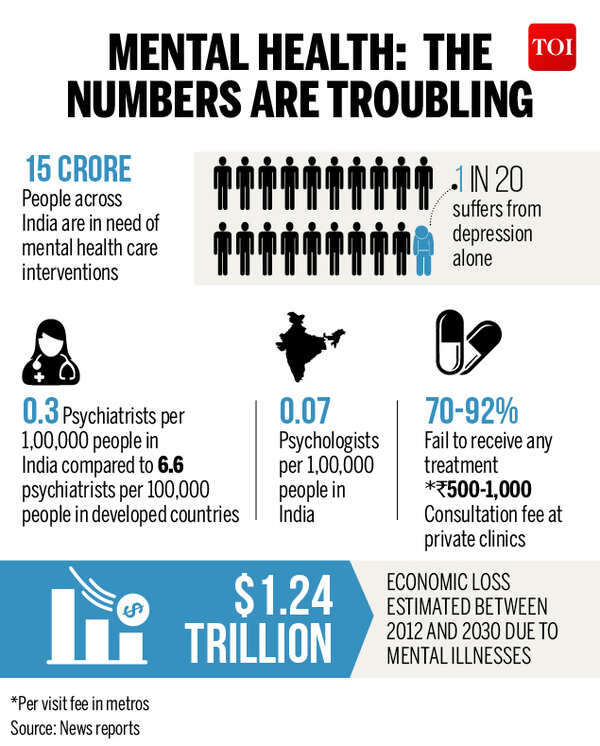
Here are some key statistics on mental health in India — they show both the scale of need and the gaps in service.


🧮 Prevalence & burden
- A study found that about 14.3% of India’s population (≈ 197 million people in 2017) had some form of mental disorder.
- For 2017: about 45.7 million had depressive disorders and about 44.9 million had anxiety disorders.
- According to the National Mental Health Survey (NMHS) 2015-16, current prevalence of any mental morbidity among adults was ~ 10.6%. PubMed+2Ministry of Health and Family Welfare+2
- Among “common mental disorders” (CMDs) in the NMHS: depressive disorders ~ 2.68%, anxiety disorders ~ 2.94% (with higher prevalence in females).
- The burden measured by disability (DALYs – disability adjusted life years) due to mental disorders increased from ~2.5% of all DALYs in 1990 to ~4.7% in 2017.
📍 Gender / urban-rural & other variations
- Females had higher prevalence of certain disorders (e.g., in CMDs: females ~5.79% vs males ~3.79%). PMC
- Urban areas show higher prevalence (NMHS found metro/urban risk ~1.86 × compared to rural). PMC
- Prevalence rates vary widely across states (the NMHS noted rates from ~5.8% to ~14.1% in different states). Ministry of Health and Family Welfare
✅ Summary at a glance
- Roughly 1 in 10 adults in India have a mental disorder right now (based on NMHS data).
- The number jumps to about 1 in 7 when broader categories (varying severity) are included (based on other studies).
- Most people who need help do not receive it — large gaps in access, service, workforce.
- The burden from mental health problems is growing in relative terms (higher share of DALYs).
Contact me to know more
🔍 Why this matters
- These numbers underline that mental health is a major public health issue in India — not a minor or marginal one.
- The large treatment gap shows there’s a huge unmet need, so awareness, access, funding and workforce building are essential.
- Policy and infrastructure (like primary-care integration) have to keep pace with this scale of need.
My Appraoch Is To Accompany Individuals On Their Journey Of Personal Growth Towards Their Authentic Selves
Services
Reprocessing
Narrative Therapy
Trauma Therapy